

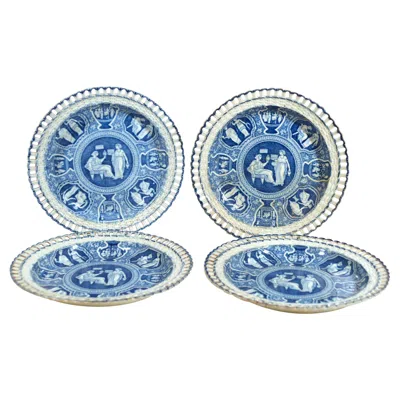
Pre-owned Neo-classical Greek Pattern Blue Openwork Dessert Plates
- Size:ONE SIZE
- condition:Pre-Owned
- price:$1500
Set Alert
For Sale On

Shop Concierge
ModeSens Before You Buy
Don’t miss out! Compare prices across 950+ vetted stores, all in one place. Plus, earn rewards every time you shop.
Join over 2M members today!
product description
Classical Elegance: A Set of Four Spode ‘Greek Pattern’ Openwork Dessert Plates Staffordshire, England, Early 19th Century This exquisite set of four dessert plates represents the height of the Greek Revival movement in English ceramics. Produced by the renowned Spode factory, the "Greek" pattern was a revolutionary departure from the typical floral or pastoral scenes of the time. The central medallion depicts a meticulously detailed scene of Ceres (the Roman goddess of agriculture and motherly relationships) alongside a priestess, rendered in a crisp, vibrant cobalt-blue transfer print. This central focus is surrounded by a complex arrangement of neoclassical vignettes and oval panels containing smaller figures, all set against a richly textured background. The plates are distinguished by their highly decorative "openwork" or pierced rims, which add a sense of lightness and architectural sophistication to the earthenwares. Encircling the well of the plate is a molded basketweave band that transitions into the delicate geometric piercings of the outer border. While these plates remain unmarked—as was common with many early Spode production runs—the specific quality of the transfer and the unique combination of the Ceres scene with this exact openwork form perfectly match documented factory samples. These pieces were likely part of a large, high-status dessert service intended for a home where the owner wished to display their education and appreciation for the "Grand Tour" aesthetic. Measurements & Condition Diameter: 7 1/2 inches (19.1 cm) Height: 3/4 inch (1.9 cm) Provenance Private Collection. Historical Context: The Hamilton Influence and the Greek Revival Introduced in 1806, the "Greek" pattern was Spode’s masterful response to a wave of Neoclassicism that had swept through Britain. The imagery for this specific series was directly inspired by the publication "Outlines from the Figures and Compositions upon the Greek, Roman and Etruscan Vases of the l